
4H | Respiratory Care Practitioner | Air Force Career
Hey there! If you are thinking about joining the Air Force, looking into medical jobs, or planning a path toward commissioning as an officer, you are in the right place. Today, we are diving deep into the 4H Respiratory Care Practitioner AFSC. This career field gives you medical training and real independence that you rarely see in other enlisted jobs. Whether you want a full military career or want to build a resume for officer selection boards.
Table of Contents
Key Takeaways
What is the 4H Respiratory Care Practitioner AFSC?
Tech School, Degrees, and Lizenses
The Three Core Rotations
Deployment Paths: CCATT vs EMEDS
Active Duty vs. Reserves and Guard
Conclusion
Key Takeaways
Updated Name: Transitioned from Cardiopulmonary Laboratory Technician to match civilian medical standards.
Better College System: Degrees are now granted through USUHS for smoother degree processing.
Direct Entry Option: Licensed civilians can fast-track through tech school using a validation process.
High Independence: Perfect for future officer applicants who want to get into the medical field.
What is the 4H Respiratory Care Practitioner AFSC?
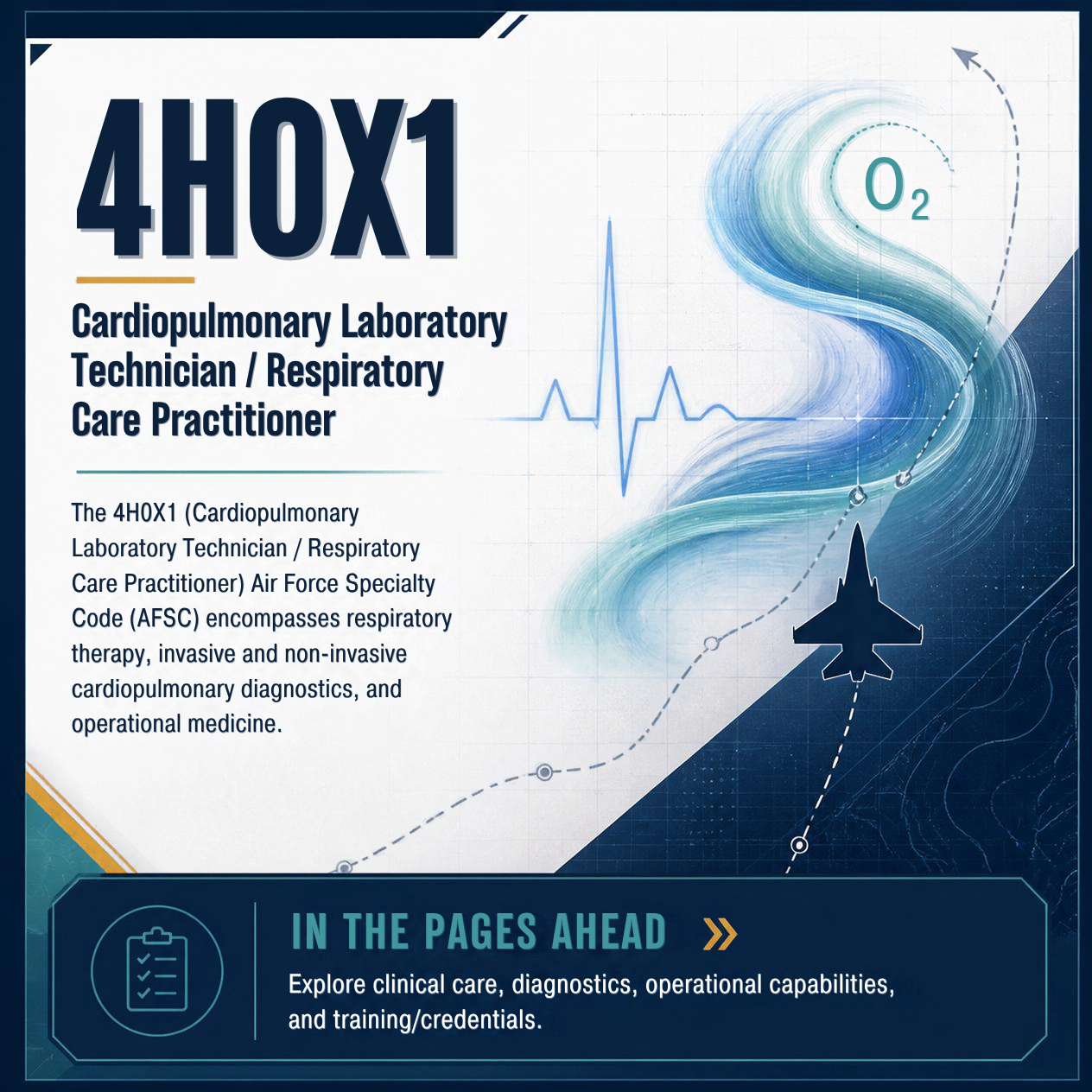
The 4H AFSC has gone through some great updates over the last few years. It used to be called the Cardiopulmonary Laboratory Technician. The Air Force changed the name to Respiratory Care Practitioner so it matches civilian name.
This career field is great because you do not get micromanaged like people in other fields. This career field allows you to help doctors diagnose and give therapies to patients. You get your orders and then you go do them without someone being behind your back watching you all the time. The high level of critical thinking you develop here is exactly what officer boards look for if you want to apply for a medical slot later.
Tech School, Degrees, and Licenses
The tech school timeline is still broken down into three main phases.
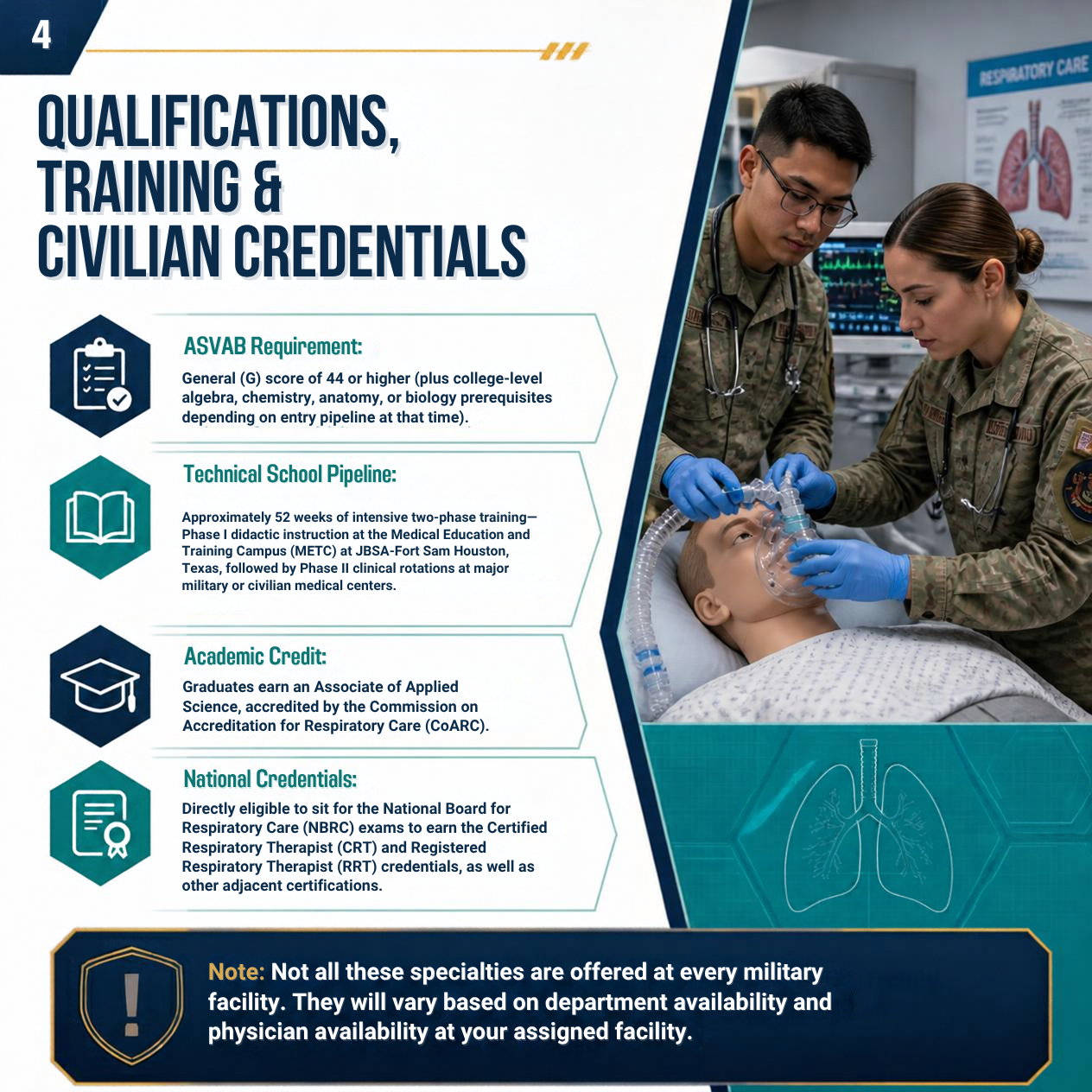
First, you head to Phase 1 at Fort Sam Houston for about four and a half months.
Next, you move to Phase 2 for around eight months, and you can even bring your family along for this part. Instead of getting your degree from the CCAF, you now earn an Associate of Science in Health Sciences (A.S.H.S.) directly from the Uniformed Services University of the Health Sciences (USUHS). This makes getting your college transcripts much faster and easier.
Once you graduate, you have six months to secure your Registered Respiratory Therapist (RRT) credential. If you are already a licensed civilian respiratory therapist, you can have the schoolhouse validate your license, skip Phase 1, and complete quick military checkoffs after basic training.
In Phase 3, or on-the-job training, you will start getting checked off on tasks, which takes around a year (Reserve and Guard do it in 6-months). Once you have done all the tasks you will be a fully independent therapist. At this point, you will be leading the area you are assigned to. A lot of times, you teach the next set of students that come after you.
The Three Core Rotations
When you are working at a base hospital, your daily job is divided into three critical areas.
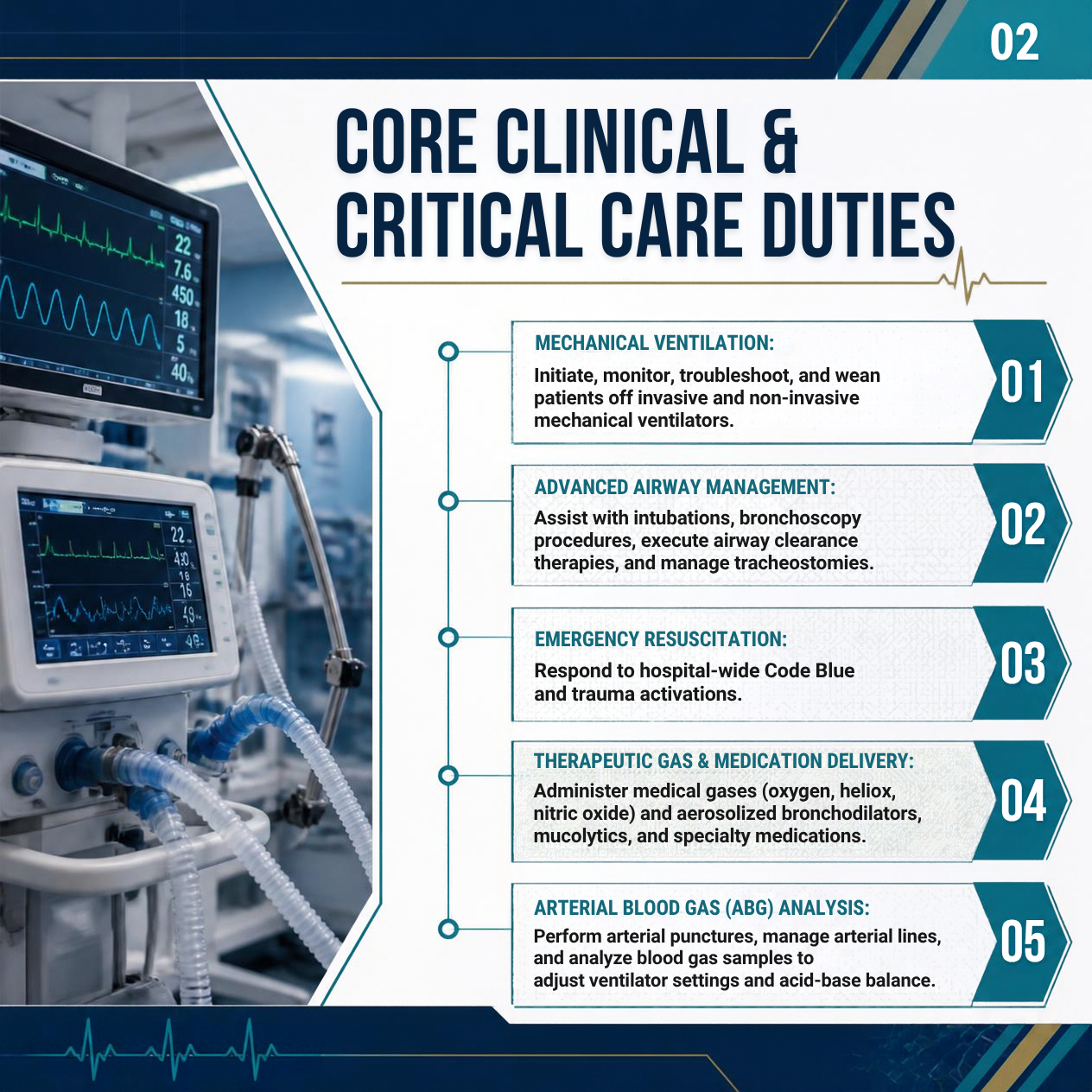
Cardiology: You will assist cardiologists with EKGs, stress tests, and Holter monitors.
Pulmonary: You will help pulmonologists with lung studies, spirometry, and bronchoscopies.
Inpatient Respiratory Services: You will manage advanced ventilators and breathing machines for critical patients.
Deployment Paths: CCATT vs EMEDS
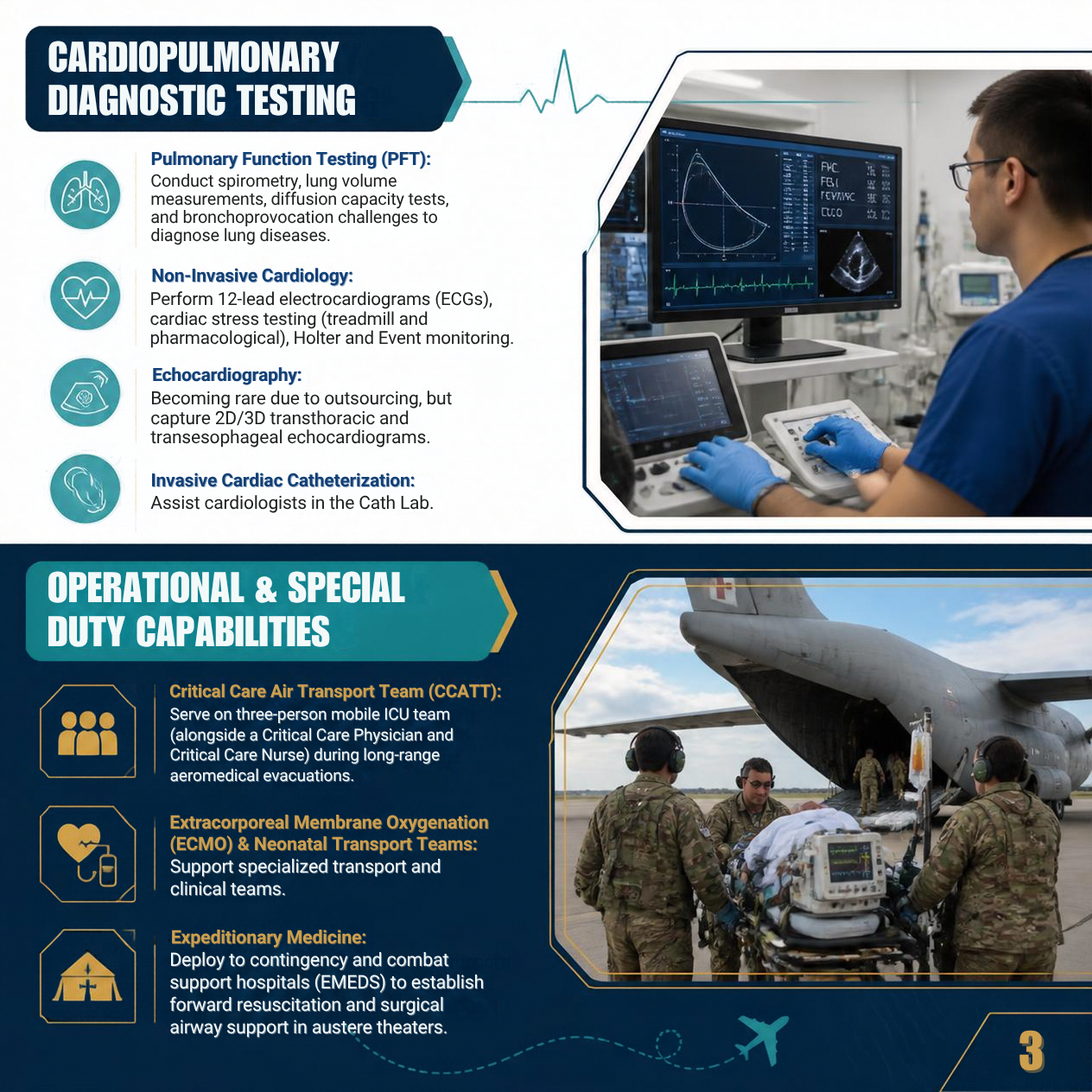
When it is time to deploy, you will follow one of two major paths. The first path is the Critical Care Air Transport Team, known as CCATT. On a CCATT mission, you operate inside military planes to keep critically injured patients stable while flying them to major hospitals.
The second path is the Expeditionary Medical Support System, or EMEDS. With EMEDS, you stay stationed at a specific deployed base clinic or hospital to work standard shifts.
Active Duty vs. Reserves and Guard
You can choose to join via active duty, the Air National Guard, or the Air Force Reserves. In many cases, the Air Force Reserves offers the best of both worlds. You can easily build a civilian medical career while keeping your military benefits. Reservists get access to Tricare Reserve Select, which gives you low monthly fees and allows you to pick your own doctors without referrals. You still get excellent tuition assistance and the GI Bill to support your higher education goals.
Conclusion
Becoming a 4H Respiratory Care Practitioner in the Air Force is an incredibly rewarding path. It teaches you critical medical skills, offers a robust degree, and sets you up perfectly for long-term growth. If you want to dive deeper into this field, check out my full career overview videos below, send me an email, or drop a comment!
References:
Updated Video: https://www.youtube.com/watch?v=wv44gbfaRqo
Original career breakdown: https://www.youtube.com/watch?v=bzuGsHdYIjc
The College of Allied Health Sciences: https://cahs.usuhs.edu/
Career field requirements and degree credits: https://usuhs.smartcatalogiq.com/en/2026-2027/academic-catalog/college-allied-health-science-cahs/respiratory-care-a-s